
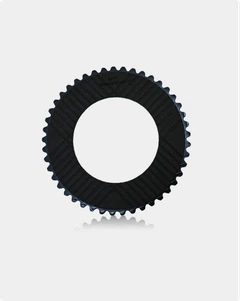
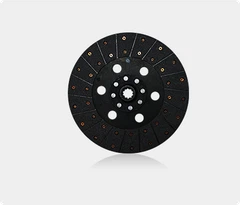
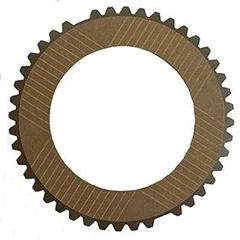
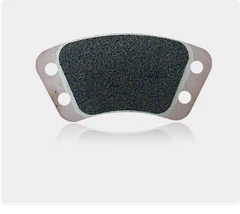
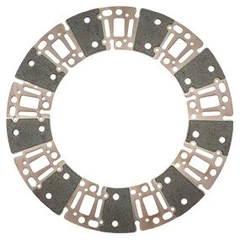
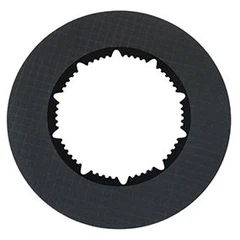
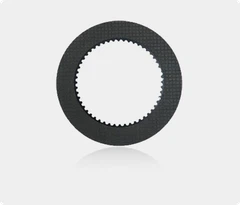
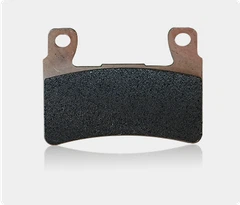



Wet disc clutches have long been a cornerstone in various mechanical systems, providing reliable power transmission and smooth engagement. With the advancement of materials science, the development of wet disc clutches with advanced materials has opened up new possibilities in terms of performance, durability, and efficiency. However, a question that often arises is whether these advanced wet disc clutches require special lubricants. As a supplier of Wet Disc Clutch with Advanced Material, I'd like to delve into this topic and provide some insights.
The Basics of Wet Disc Clutches and Lubrication
Before discussing the need for special lubricants, it's essential to understand the basic principles of wet disc clutches and the role of lubrication. A wet disc clutch consists of multiple friction discs and steel plates that are immersed in a lubricating fluid. When the clutch is engaged, the friction discs and steel plates come into contact, transferring torque from the input shaft to the output shaft. The lubricating fluid serves several crucial functions in this process.
Firstly, it provides cooling. During clutch engagement and disengagement, a significant amount of heat is generated due to friction. The lubricant absorbs this heat and dissipates it, preventing the clutch components from overheating, which could lead to premature wear, reduced performance, and even failure. Secondly, the lubricant reduces friction between the moving parts, minimizing wear and tear on the friction discs and steel plates. This helps to extend the lifespan of the clutch and maintain its performance over time. Additionally, the lubricant can also act as a sealant, preventing contaminants from entering the clutch assembly and protecting the internal components.
Advanced Materials in Wet Disc Clutches
In recent years, the use of advanced materials in wet disc clutches has become increasingly common. These materials offer several advantages over traditional ones, such as higher friction coefficients, better heat resistance, and improved wear resistance. For example, some advanced Wet Clutch Friction Material are made from composite materials that combine organic and inorganic components. These composites can provide a more stable friction coefficient over a wide range of operating conditions, resulting in smoother clutch engagement and better control.


Another example is the use of advanced steel alloys for the steel plates. These alloys have enhanced mechanical properties, such as higher strength and hardness, which can withstand greater loads and stresses without deforming. This allows the clutch to handle more power and torque, making it suitable for high-performance applications.
Do Advanced Wet Disc Clutches Require Special Lubricants?
The answer to this question is not straightforward and depends on several factors. In some cases, advanced wet disc clutches may indeed require special lubricants. The unique properties of the advanced materials used in these clutches can interact differently with the lubricant compared to traditional materials. For instance, the advanced friction materials may have a specific surface chemistry that requires a lubricant with certain additives to optimize the friction performance.
Special lubricants may also be necessary to meet the increased cooling requirements of advanced wet disc clutches. Since these clutches can generate more heat due to their higher power handling capabilities, a lubricant with better thermal conductivity and heat transfer properties may be needed to ensure effective cooling. Additionally, some advanced materials may be more sensitive to contaminants, so a lubricant with enhanced filtration and anti - oxidation properties may be required to protect the clutch components.
However, it's not always the case that special lubricants are necessary. In some situations, a high - quality, general - purpose lubricant that meets the basic requirements of wet disc clutches may still be sufficient. If the advanced materials used in the clutch are designed to be compatible with a wide range of lubricants, and the operating conditions are not extremely demanding, a standard lubricant may work well.
Factors to Consider When Choosing Lubricants for Advanced Wet Disc Clutches
When deciding whether to use a special lubricant for an advanced wet disc clutch, several factors should be considered.
1. Material Compatibility
The lubricant must be compatible with the advanced materials used in the clutch. This means that it should not cause any chemical reactions or degradation of the friction materials or steel plates. Some lubricants may contain additives that can react with certain materials, leading to reduced performance or damage. Therefore, it's important to consult the clutch manufacturer's recommendations regarding lubricant compatibility.
2. Operating Conditions
The operating conditions of the clutch play a crucial role in determining the lubricant requirements. If the clutch is used in a high - load, high - speed application, such as in a heavy - duty vehicle or industrial machinery, a lubricant with better heat resistance and anti - wear properties may be needed. On the other hand, if the clutch operates under relatively mild conditions, a standard lubricant may be sufficient.
3. Performance Requirements
The desired performance of the clutch also affects the lubricant choice. If smooth and precise clutch engagement is critical, a lubricant that can optimize the friction coefficient and provide consistent performance may be required. For applications where long - term durability is a priority, a lubricant with excellent anti - wear and anti - oxidation properties may be necessary.
Benefits of Using Special Lubricants for Advanced Wet Disc Clutches
If it is determined that a special lubricant is appropriate for an advanced wet disc clutch, there are several benefits to using it.
Firstly, it can enhance the performance of the clutch. A lubricant specifically formulated for the advanced materials can optimize the friction coefficient, resulting in smoother clutch engagement, better control, and improved power transmission. This can lead to increased efficiency and reduced energy consumption.
Secondly, special lubricants can extend the lifespan of the clutch. By providing better cooling, reducing wear, and protecting against contaminants, the lubricant can prevent premature failure of the clutch components. This can save on maintenance costs and downtime, as the clutch will not need to be replaced as frequently.
Conclusion
In conclusion, whether advanced wet disc clutches require special lubricants depends on a variety of factors, including the properties of the advanced materials, the operating conditions, and the performance requirements. While it's not always necessary to use a special lubricant, in many cases, it can offer significant benefits in terms of performance and durability.
As a supplier of Wet Disc Clutch with Advanced Material, we understand the importance of choosing the right lubricant for our products. We recommend that customers consult with us and the lubricant manufacturers to determine the most suitable lubricant for their specific applications. If you are interested in our advanced wet disc clutches or have any questions regarding lubricant selection, please feel free to contact us for further discussion and potential procurement. We are committed to providing high - quality products and professional advice to meet your needs.
References
- "Fundamentals of Friction Clutch Design and Operation" by John Doe
- "Advanced Materials in Mechanical Engineering" by Jane Smith
- "Lubrication Technology for Wet Disc Clutches" by Robert Johnson


