



In the realm of fastening technology, rivets and bolts stand out as two of the most commonly used methods for joining materials. As a rivet supplier, I've witnessed firsthand the diverse applications and unique characteristics of these fastening solutions. Understanding the differences between rivets and bolts is crucial for making informed decisions in various industries, from construction and automotive to aerospace and manufacturing. In this blog post, we'll delve into the key distinctions between rivets and bolts, exploring their design, installation, performance, and applications.
Design and Structure
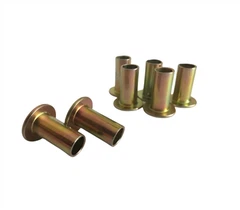
Rivets are permanent fasteners that consist of a smooth, cylindrical shaft with a head on one end. During installation, the rivet is inserted into pre-drilled holes in the materials to be joined, and the tail end is deformed to create a second head, effectively clamping the materials together. There are several types of rivets, including solid rivets, blind rivets, and tubular rivets, each designed for specific applications. Button Head Solid Rivets are a popular choice for applications where a smooth, rounded head is desired.
Bolts, on the other hand, are threaded fasteners that typically consist of a cylindrical shaft with external threads and a head on one end. Bolts are used in conjunction with nuts, which are threaded internally to match the bolt's threads. When the nut is tightened onto the bolt, it creates a clamping force that holds the materials together. Bolts come in a variety of sizes, shapes, and materials, and can be used with different types of washers to distribute the clamping force evenly.
Installation Process
One of the primary differences between rivets and bolts lies in their installation process. Rivets are installed using specialized tools, such as rivet guns or presses, which deform the tail end of the rivet to create a second head. This process is typically quick and efficient, and once installed, rivets cannot be easily removed without damaging the fastener or the materials being joined. Rivets are often used in applications where a permanent, tamper-proof joint is required.
Bolts, on the other hand, are installed by threading the bolt through pre-drilled holes in the materials and tightening the nut onto the bolt using a wrench or other tightening tool. This process allows for easy installation and removal, making bolts a popular choice for applications where disassembly and reassembly may be required. However, the installation of bolts can be more time-consuming than rivets, especially in applications where a large number of fasteners need to be installed.
Strength and Performance
In terms of strength and performance, both rivets and bolts have their advantages and disadvantages. Rivets are known for their high shear strength, which makes them ideal for applications where the joint is subjected to lateral forces. The deformation of the rivet during installation creates a tight, secure joint that can withstand significant shear loads. Additionally, rivets are less likely to loosen over time due to vibration or other external factors, making them a reliable choice for long-term applications.
Bolts, on the other hand, are known for their high tensile strength, which makes them ideal for applications where the joint is subjected to pulling or stretching forces. The threaded design of bolts allows for precise control over the clamping force, which can be adjusted to meet the specific requirements of the application. However, bolts are more susceptible to loosening over time due to vibration or other external factors, which can compromise the integrity of the joint. To prevent loosening, bolts are often used in conjunction with locking devices, such as lock washers or thread-locking compounds.
Applications
The choice between rivets and bolts depends largely on the specific application and the requirements of the joint. Rivets are commonly used in applications where a permanent, tamper-proof joint is required, such as in aircraft construction, automotive manufacturing, and structural steelwork. They are also popular in applications where a smooth, flush finish is desired, such as in the assembly of electronic devices and appliances.
Bolts, on the other hand, are commonly used in applications where disassembly and reassembly may be required, such as in machinery and equipment maintenance, furniture assembly, and automotive repair. They are also popular in applications where a high degree of adjustability and precision is required, such as in the construction of bridges and buildings.
Conclusion
In conclusion, rivets and bolts are two of the most commonly used fastening methods in various industries. While both rivets and bolts serve the same basic function of joining materials together, they have distinct differences in terms of design, installation, strength, and performance. As a rivet supplier, I understand the importance of choosing the right fastening solution for your specific application. Whether you need a permanent, tamper-proof joint or a fastener that can be easily installed and removed, I can provide you with the high-quality rivets and expert advice you need to get the job done right.
If you're interested in learning more about our rivet products or have any questions about the differences between rivets and bolts, please don't hesitate to contact us. Our team of experienced professionals is here to help you find the right fastening solution for your needs. We look forward to working with you and helping you achieve your project goals.

References
- Machinery's Handbook, 31st Edition
- Fastening and Joining Handbook
- ASME Boiler and Pressure Vessel Code


