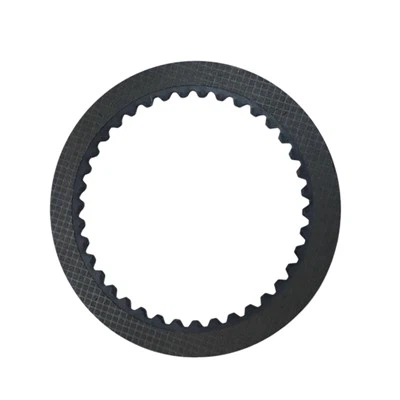
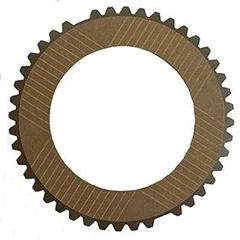
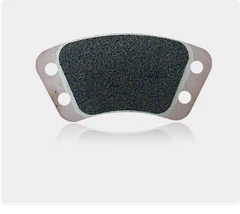
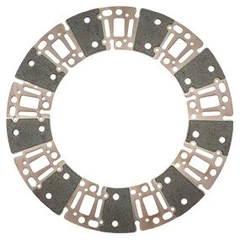
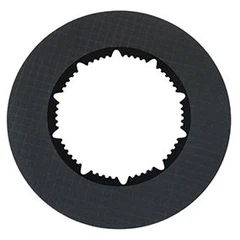
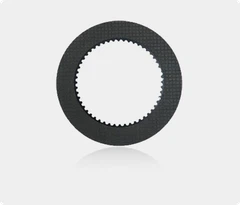
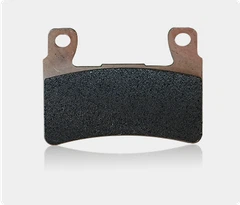


During the driving process of a motorcycle, the brake system is one of the core components to ensure riding safety, and the brake pad is a key component that directly contacts the brake disc to generate friction. Its performance directly affects the braking effect and riding experience.With the continuous advancement of motorcycle technology, the material and design of brake pads are also continuously optimized to meet the needs of different riding scenarios.
Classification of brake pad materials
Currently, the mainstream motorcycle brake pads on the market are mainly divided into three categories: organic brake pads, semi-metallic brake pads and ceramic brake pads.
Organic brake pads are usually made of a mixture of fiber, resin and filler, with low noise and dust, suitable for daily commuting. Its advantages are smooth braking and less wear on the brake disc, but performance may decay in high temperature environments.
Semi-metallic brake pads add metal fibers to improve high temperature resistance and braking strength, suitable for high-performance motorcycles or long-distance riding. However, this type of brake pad has relatively more noise and dust, and slightly higher wear on the brake disc.
Ceramic brake pads are a high-end option that has emerged in recent years. They are made of ceramic fibers and special fillers, and have the characteristics of high temperature resistance, low noise and long life. Its braking performance is stable, especially suitable for high-performance motorcycles or racetracks, but the cost is relatively high.
Performance considerations of brake pads
When choosing brake pads, you need to consider factors such as braking effect, durability, noise and dust. For daily commuting, organic brake pads are an economical and practical choice; for high-performance motorcycles or frequent braking scenarios, semi-metallic or ceramic brake pads can provide more stable braking performance. In addition, the adaptability of brake pads is also crucial. Different models and braking systems may require brake pads of specific specifications to ensure optimal performance.
Future development trends
With increasingly stringent environmental regulations, low-dust and low-noise brake pads have become the focus of research and development. At the same time, the application of composite materials and nanotechnology is also improving the wear resistance and thermal stability of brake pads. In the future, intelligent brake pads may become a trend, monitoring the wear status through sensors to further improve safety.
The choice of motorcycle brake pads directly affects riding safety. Understanding its material and performance characteristics will help riders make more informed decisions based on their own needs.