

As a long-standing connection element, rivets still play an irreplaceable role in modern industrial manufacturing. From aerospace to automotive manufacturing, from building structures to electronic devices, rivets have become basic components in many industries with their reliable connection performance and diverse types.
The basic principle of rivets is to firmly connect two or more parts together through deformation or pressure. Unlike bolts or welding, rivets usually do not require additional fasteners or energy input, which makes them more advantageous in certain application scenarios. For example, in environments where rapid assembly or disassembly is limited, rivets can provide efficient and durable connection solutions.
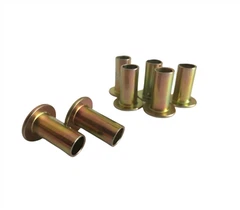
There are many types of rivets, including solid rivets, hollow rivets, blind rivets, etc. Solid rivets are usually made of metal and deformed by hammering or pressure to form a strong connection, which is suitable for occasions with high strength requirements. Hollow rivets are hollow inside and lighter in weight, and are often used in weight-sensitive industries such as aerospace. Blind rivets and blind rivets are widely used in scenarios where they cannot be operated from both sides, such as the assembly of car bodies or household appliances, due to their convenient installation.
In terms of material selection, rivets can be made of metal materials such as aluminum, steel, stainless steel or copper according to specific application requirements. Aluminum rivets are often used in transportation and electronic products due to their light weight and corrosion resistance; stainless steel rivets are favored in construction and marine engineering due to their high strength and corrosion resistance. In addition, with the advancement of materials science, some high-performance alloy rivets have also begun to be used in extreme environments, such as high temperature or highly corrosive scenarios.
In recent years, with the popularization of automation technology, the installation method of rivets has been continuously innovated. The introduction of automatic riveting equipment has greatly improved production efficiency while ensuring the consistency of connection quality. This trend is particularly evident in automobile manufacturing and electronic equipment production, which has driven the continued growth of rivet demand.
As a basic component in industrial connection, the technological advancement and application expansion of rivets continue. Whether in traditional manufacturing or emerging industries, rivets have become an indispensable part of modern industry with their reliability and adaptability.