
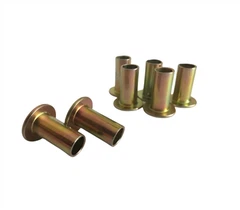



Can button head solid rivets be used in railway applications? That's a question I often get asked as a supplier of Button Head Solid Rivets. In this blog, I'll dig into this topic and share my thoughts based on my experience in the fastener industry.

First off, let's talk about what button head solid rivets are. These are simple yet effective fasteners. They've got a round, dome - shaped head on one end and a shank that's inserted through holes in the materials to be joined. Once in place, the end of the shank is deformed, creating a second head that holds the materials together tightly. They're made from various materials like steel, aluminum, and copper, each offering different properties in terms of strength, corrosion resistance, and weight.
Now, onto railway applications. The railway industry is super demanding. The components used in trains and railway infrastructure have to withstand extreme conditions. Trains move at high speeds, which means there's a lot of vibration, shock, and stress on the parts. Plus, they're exposed to different weather conditions, from scorching sun to freezing snow and rain. So, any fastener used in this industry needs to be up to the task.
One of the key requirements in railway applications is high strength. Button head solid rivets can offer that. When made from high - quality steel, they can handle significant loads. For example, in the construction of railway carriages, they can be used to join structural components like frames and panels. The solid design of these rivets ensures that they don't come loose easily under the constant vibration and movement of the train.
Corrosion resistance is another big deal. Railway tracks and rolling stock are often outdoors, and rust can weaken the fasteners over time. Aluminum button head solid rivets are a great option here. Aluminum has a natural oxide layer that protects it from corrosion. In coastal areas where the air is salty, or in regions with high humidity, using aluminum rivets can extend the lifespan of the joints and reduce maintenance costs.
In terms of installation, button head solid rivets are relatively straightforward. They don't require complex tools or electrical power for installation. This is an advantage in railway applications where quick repairs might be needed in the field. A worker can carry a simple rivet gun and a supply of rivets to make on - the - spot fixes, whether it's a loose panel on a train or a small repair on the railway track infrastructure.
But it's not all rosy. There are some limitations to using button head solid rivets in railway applications. One of the main issues is the inability to disassemble easily. Once a rivet is installed, removing it can be a hassle. In some cases, where parts need to be replaced or inspected regularly, a more easily removable fastener like a bolt and nut might be a better choice. For example, in the maintenance of electrical components in a train, where access might be required frequently, a non - permanent fastener would be more practical.
Another aspect is the aesthetic factor. While button head solid rivets are functional, they might not always be the most visually appealing option. In some high - end railway carriage designs where a sleek appearance is desired, other types of fasteners that can be hidden or blended in better with the design might be preferred.
Cost is also a consideration. Depending on the material and size, button head solid rivets can be more expensive than some other types of fasteners. In large - scale railway projects, where thousands of fasteners are needed, the cost can add up quickly. This might influence the decision - making process when choosing the right fastener for the job.
Now, let's look at some real - world examples. In the manufacturing of freight wagons, button head solid rivets are commonly used to attach the side panels and flooring. The strength of these rivets ensures that the cargo stays secure during transit. On the railway tracks themselves, they can be used in the construction of switch points and other track - side equipment.
In conclusion, button head solid rivets can definitely have a place in railway applications. They offer strength, corrosion resistance, and easy installation in many cases. However, their limitations in terms of disassembly, aesthetics, and cost need to be carefully considered.
If you're in the railway industry and are thinking about using button head solid rivets for your projects, I'd love to have a chat. As a supplier of Button Head Solid Rivets, I can provide you with high - quality products and advice on the best type of rivets for your specific needs. Whether you're building new trains, maintaining existing ones, or working on railway infrastructure, I'm here to help. Reach out to me to start a discussion about your procurement requirements.
References
- "Fasteners in the Railway Industry" - A technical report from a leading fastener research institute.
- "Materials for Railway Applications" - A handbook published by a major railway engineering association.


