
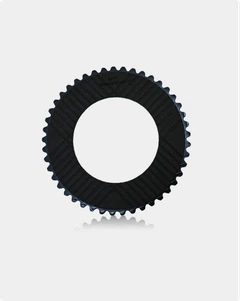
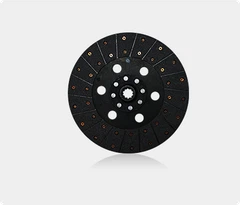
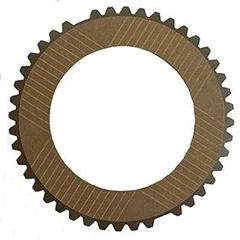
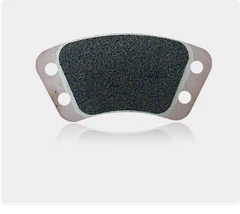
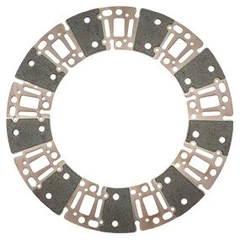
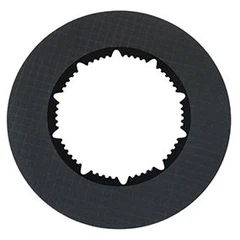
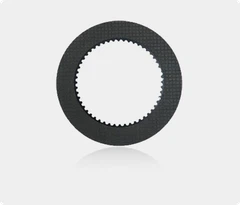
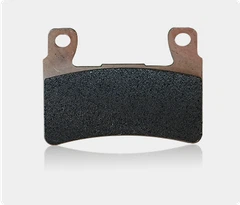



When it comes to purchasing wear resistant sintered clutch plates, ensuring their quality is of utmost importance. As a supplier of wear resistant sintered clutch plates, I understand the significance of providing high - quality products to our customers. In this blog, I will share some key aspects that can help you ensure the quality of wear resistant sintered clutch plates during the purchase process.
1. Material Selection
The material of the clutch plate is the foundation of its quality. High - quality materials are essential for achieving excellent wear resistance, heat dissipation, and friction performance.
Sintered Metals: Sintered metals are commonly used in wear resistant clutch plates. These materials are made by compacting and sintering metal powders, which results in a dense and homogeneous structure. The choice of metal powders, such as copper, iron, and their alloys, can significantly affect the properties of the clutch plate. For example, copper - based sintered materials offer good thermal conductivity and corrosion resistance, while iron - based materials provide high strength and wear resistance. You can learn more about different Clutch Plate Material.
Friction Materials: In addition to the base metal, the friction material on the clutch plate is also crucial. Friction materials should have stable friction coefficients over a wide range of operating conditions, including temperature, pressure, and sliding speed. Some advanced friction materials are designed to be Cost Effective Friction Plate Material, which can provide good performance at a reasonable cost.
2. Manufacturing Process
The manufacturing process of wear resistant sintered clutch plates has a direct impact on their quality. A well - controlled manufacturing process can ensure the consistency and reliability of the products.
Powder Preparation: The first step in the manufacturing process is powder preparation. The metal powders need to be carefully selected and mixed in the right proportions. The particle size, shape, and purity of the powders can affect the sintering process and the final properties of the clutch plate.
Compaction: During the compaction process, the powder mixture is pressed into the desired shape under high pressure. The compaction pressure and the uniformity of the pressure distribution are critical factors. If the compaction is not uniform, it can lead to density variations in the clutch plate, which may affect its performance and durability.
Sintering: Sintering is the process of heating the compacted powder to a high temperature below its melting point to bond the particles together. The sintering temperature, time, and atmosphere need to be precisely controlled. A proper sintering process can improve the density, hardness, and wear resistance of the clutch plate.
3. Quality Control Measures
To ensure the quality of wear resistant sintered clutch plates, strict quality control measures should be implemented throughout the production process.
In - process Inspection: At each stage of the manufacturing process, in - process inspections should be carried out. For example, during powder preparation, the chemical composition and particle size of the powders can be analyzed. During compaction, the dimensions and density of the compacts can be measured. During sintering, the temperature and atmosphere can be monitored to ensure they are within the specified range.
Final Inspection: After the manufacturing process is completed, a comprehensive final inspection should be conducted. This includes dimensional inspection to ensure that the clutch plate meets the design requirements, surface finish inspection to check for any defects or irregularities, and performance testing to evaluate its friction, wear, and heat dissipation properties.
4. Performance Testing
Performance testing is an important way to verify the quality of wear resistant sintered clutch plates.


Friction Coefficient Testing: The friction coefficient of the clutch plate is a key parameter that affects its performance. Friction coefficient testing can be carried out under different operating conditions, such as different loads, speeds, and temperatures. A stable and appropriate friction coefficient is essential for smooth clutch engagement and disengagement.
Wear Testing: Wear testing is used to evaluate the wear resistance of the clutch plate. By simulating the actual working conditions of the clutch, the amount of wear of the clutch plate can be measured over a certain period of time. This can help to predict the service life of the clutch plate.
Heat Dissipation Testing: Since the clutch plate generates a large amount of heat during operation, good heat dissipation performance is necessary. Heat dissipation testing can measure the temperature rise of the clutch plate under different operating conditions and evaluate its ability to dissipate heat.
5. Supplier Reputation and Experience
The reputation and experience of the supplier also play an important role in ensuring the quality of wear resistant sintered clutch plates.
Reputation: A supplier with a good reputation is more likely to provide high - quality products. You can check the supplier's customer reviews, industry reputation, and certifications. A supplier that has a long - standing reputation for quality and reliability is a better choice.
Experience: An experienced supplier has a deeper understanding of the manufacturing process and the performance requirements of wear resistant sintered clutch plates. They are more likely to have advanced production technology and strict quality control systems. They can also provide better technical support and after - sales service.
6. Corrosion Resistance
In some applications, the clutch plate may be exposed to corrosive environments. Therefore, corrosion resistance is also an important factor to consider. Corrosion Resistant Clutch Friction Plate Facing can be used to improve the durability of the clutch plate in such environments.
The surface treatment of the clutch plate can enhance its corrosion resistance. For example, some clutch plates are coated with anti - corrosion materials to protect them from rust and chemical attack.
Conclusion
Ensuring the quality of wear resistant sintered clutch plates during purchase requires careful consideration of multiple factors, including material selection, manufacturing process, quality control measures, performance testing, supplier reputation, and corrosion resistance. By paying attention to these aspects, you can make a more informed decision and purchase high - quality clutch plates that meet your specific requirements.
If you are interested in purchasing wear resistant sintered clutch plates, we are here to provide you with high - quality products and professional services. We have a team of experts who can help you select the most suitable clutch plates for your application. Please feel free to contact us for further discussions and negotiations.
References
- ASM Handbook, Volume 7: Powder Metallurgy, ASM International.
- Automotive Clutch Design and Performance, Society of Automotive Engineers (SAE).
- Tribology of Friction Materials, CRC Press.


