
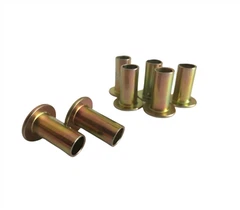



When it comes to fastening solutions, the weight of fasteners can be a critical factor, especially in industries where weight reduction is paramount, such as aerospace, automotive, and consumer electronics. As an OEM rivets supplier, I've had the opportunity to delve deep into the world of fasteners and understand how OEM rivets stack up against other types in terms of weight. In this blog post, I'll explore the weight characteristics of OEM rivets and compare them with other popular fasteners.
Understanding OEM Rivets
OEM rivets are designed and manufactured to meet the specific requirements of original equipment manufacturers. They come in a variety of types, including solid rivets, blind rivets, and tubular rivets, each with its own unique properties and applications. Solid rivets, for example, are known for their high strength and reliability, making them suitable for heavy - duty applications. Blind rivets, on the other hand, are easy to install and can be used in applications where access is limited to only one side of the workpiece.
One of the key advantages of OEM rivets is their ability to be customized. Manufacturers can adjust the size, material, and shape of the rivets to optimize their performance for a particular application. This customization also extends to weight, as we can engineer rivets to be as light as possible without sacrificing strength.
Weight Comparison with Other Fasteners
Bolts and Nuts
Bolts and nuts are among the most commonly used fasteners in various industries. They are known for their versatility and ease of disassembly. However, when it comes to weight, bolts and nuts can be relatively heavy. This is because they typically require a threaded shaft and a nut, which adds extra mass.
OEM rivets, in contrast, can be significantly lighter. For example, a solid rivet made from aluminum can weigh much less than a steel bolt of the same diameter and length. The absence of threads in rivets also contributes to their lower weight. In applications where weight is a concern, such as in aircraft construction, the use of OEM rivets can lead to substantial weight savings.
Screws
Screws are another popular type of fastener. They are self - threading and can be easily installed and removed. Similar to bolts and nuts, screws often have a threaded design, which adds weight. Additionally, the head of a screw can be relatively large, further increasing its mass.
OEM rivets, especially those with a streamlined design, can be much lighter. For instance, Button Head Solid Rivets are designed to have a low - profile head, which reduces their overall weight. These rivets are ideal for applications where weight reduction and a clean appearance are desired.
Welding
Welding is a permanent joining method that creates a strong bond between two pieces of metal. While welding can provide excellent strength, it often adds a significant amount of weight due to the additional filler material used. Moreover, the heat affected zone around the weld can cause distortion and require additional processing to correct.
OEM rivets offer a lightweight alternative to welding. They can be installed quickly and without the need for additional filler material. This not only reduces the weight of the joint but also simplifies the assembly process. In industries where weight and production efficiency are crucial, such as the automotive industry, OEM rivets are becoming an increasingly popular choice.

Factors Affecting the Weight of OEM Rivets
Material Selection
The choice of material has a significant impact on the weight of OEM rivets. Common materials used for rivets include aluminum, steel, and titanium. Aluminum is known for its low density, making it a popular choice for applications where weight reduction is a priority. Steel, on the other hand, is stronger but heavier. Titanium offers a good balance between strength and weight, but it is also more expensive.
As an OEM rivets supplier, we work closely with our customers to select the most appropriate material for their specific application. By understanding the requirements in terms of strength, corrosion resistance, and weight, we can recommend the best material to meet their needs.
Design Optimization
The design of the rivet also plays a role in its weight. For example, the shape of the head and the shank can be optimized to reduce mass without compromising strength. We use advanced engineering techniques to design rivets that are as light as possible while still meeting the required performance standards.
In addition, the size of the rivet can be carefully selected. Using the smallest possible rivet that can still provide the necessary strength can significantly reduce the overall weight of the assembly.
Applications Where Weight Matters
Aerospace Industry
In the aerospace industry, weight is a critical factor. Every pound of weight reduction can lead to significant fuel savings and increased payload capacity. OEM rivets are widely used in aircraft construction due to their lightweight and high - strength properties. They are used to join various components, such as wings, fuselages, and engine parts.
Automotive Industry
The automotive industry is also constantly looking for ways to reduce weight to improve fuel efficiency and performance. OEM rivets are used in the assembly of car bodies, interiors, and engine components. By replacing heavier fasteners with lightweight rivets, automakers can achieve significant weight savings without sacrificing safety or durability.
Consumer Electronics
In the consumer electronics industry, weight is an important consideration for portability. OEM rivets are used to assemble smartphones, laptops, and other electronic devices. Their lightweight nature allows manufacturers to create thinner and lighter products without compromising the integrity of the assembly.
Conclusion
In conclusion, OEM rivets offer a lightweight alternative to other fasteners. Their ability to be customized in terms of material and design allows for optimal weight reduction without sacrificing strength. When compared to bolts, nuts, screws, and welding, OEM rivets can provide significant weight savings, making them an ideal choice for industries where weight is a critical factor.
If you're looking for high - quality OEM rivets for your application, we'd love to hear from you. Our team of experts can work with you to understand your requirements and provide the best fastening solutions. Whether you need lightweight rivets for aerospace, automotive, or consumer electronics applications, we have the expertise and resources to meet your needs. Contact us today to start a discussion about your rivet requirements and explore how we can help you achieve your weight - reduction goals.
References
- "Fasteners Handbook" - A comprehensive guide on different types of fasteners and their properties.
- Industry reports on aerospace, automotive, and consumer electronics manufacturing, highlighting the importance of weight reduction in these sectors.
- Technical papers on the design and optimization of rivets for weight reduction.


