
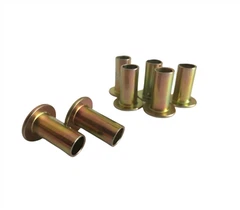



Hey there! As a rivets supplier, I often get asked about different types of rivets. One type that's quite interesting is split rivets. Let's dive into what split rivets are, how they work, and where you can use them.
First off, what exactly are split rivets? Well, split rivets are a kind of fastener. They've got a unique design. Unlike some other rivets, they have a split down the shaft. This split is a key feature that makes them work the way they do.
The structure of a split rivet consists of a head and a shank. The head is usually flat or domed. It's the part that sits on the surface of the material you're joining. The shank is the long part that goes through the holes in the materials. And that split in the shank is what allows the rivet to expand after installation.
When you're installing a split rivet, you start by inserting the shank through pre - drilled holes in the materials you want to join. The holes should be just the right size, a bit bigger than the shank of the rivet. Once the shank is through the holes, you use a tool, like a hammer or a rivet setter.
When you strike the end of the rivet with the tool, the force causes the split shank to flare out or expand. The split parts of the shank are pushed outward, and they form a second "head" on the opposite side of the material. This second head, along with the original head, holds the materials tightly together. It creates a strong and permanent joint.
One of the great things about split rivets is how easy they are to install. You don't need a lot of fancy equipment. A simple hammer can do the job in many cases. This makes them a popular choice for DIY projects. Whether you're working on a small craft project at home or doing some light repair work on machinery, split rivets can come in really handy.
Let's talk about the materials used to make split rivets. They can be made from a variety of materials. One common material is steel. Steel split rivets are strong and durable. They can handle a lot of stress and are suitable for heavy - duty applications. For example, in the automotive industry, steel split rivets might be used to join parts of the body frame or some mechanical components.
Another material is aluminum. Aluminum split rivets are lightweight and corrosion - resistant. They're often used in applications where weight is a concern, like in the aerospace industry. Airplanes have many parts that need to be joined together, and aluminum split rivets are a great choice because they help keep the overall weight of the aircraft down.
Brass split rivets are also popular. Brass has a nice appearance and good corrosion resistance. It's often used in decorative applications. You might see brass split rivets in furniture making, where they can add a touch of style while still providing a strong joint.
Now, let's look at the different applications of split rivets. In the construction industry, split rivets can be used to join metal sheets together. For example, when building a metal shed or a garage, split rivets can hold the panels in place. They're also used in electrical enclosures to attach covers and brackets.
In the manufacturing of consumer products, split rivets are everywhere. Think about a pair of jeans. The rivets on the pockets are often split rivets. They provide a strong connection between the fabric and the metal parts, and they can withstand a lot of pulling and stretching.
In the electronics industry, split rivets can be used to assemble circuit boards and other components. They provide a reliable way to attach components to the board without using soldering, which can be more complex and time - consuming in some cases.
If you're looking for a different type of rivet, we also offer Button Head Solid Rivets. These are great for projects where you need a more traditional look and a strong, solid connection. They work well in a variety of industries, from manufacturing to jewelry making.
When it comes to choosing the right split rivet for your project, there are a few things to consider. First, think about the materials you're joining. If you're joining two different materials, like metal and plastic, you need to choose a rivet that will work well with both.
The thickness of the materials is also important. You need to make sure the length of the rivet shank is long enough to go through both materials and still have enough length to flare out and create a good joint.
The strength requirements of your project are another factor. If you're working on a project that will be under a lot of stress, like a bridge or a heavy - duty machine, you'll need a stronger rivet, like a steel one.
As a rivets supplier, I can help you choose the right split rivets for your needs. Whether you're a professional in the manufacturing industry or a DIY enthusiast working on a weekend project, we've got the rivets you need.

If you're interested in purchasing split rivets or any of our other rivet products, get in touch with me. We can talk about your specific requirements and find the best solution for you. We offer high - quality rivets at competitive prices, and we're committed to providing excellent customer service. Don't hesitate to reach out and start the procurement process today!
References
- "Fasteners: A Comprehensive Guide" by Smith, John. 2020.
- "The Handbook of Rivet Technology" by Johnson, Emily. 2018.


