
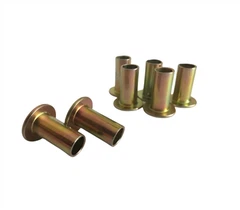



Hey there! As a supplier of Button Head Solid Rivets, I've been getting a lot of questions lately about the difference between button head and flat head solid rivets. So, I thought I'd take a few minutes to break it down for you.
First off, let's talk about what rivets are in general. Rivets are fasteners used to join two or more pieces of material together. They're commonly used in a variety of industries, from automotive and aerospace to construction and manufacturing. Solid rivets, as the name suggests, are made from a single piece of material, typically metal. They're installed by inserting the rivet through pre - drilled holes in the materials to be joined and then deforming the end of the rivet to secure it in place.
Now, let's get into the specifics of button head and flat head solid rivets.
Appearance
The most obvious difference between button head and flat head solid rivets is their appearance. Button head rivets have a rounded, dome - shaped head that protrudes above the surface of the material they're joining. This head gives them a distinct, somewhat decorative look. It's kind of like a little button sitting on top of the joint. On the other hand, flat head rivets have a flat, countersunk head. This head sits flush with the surface of the material, creating a smooth, even finish.
The appearance of the rivet can be a big factor depending on the application. If you're working on a project where aesthetics are important, like a piece of furniture or a decorative metalwork, button head rivets might be the way to go. Their rounded heads can add a bit of style and visual interest. But if you need a smooth, seamless surface, such as in a sheet metal enclosure or a component where the rivet head could interfere with other parts, flat head rivets are the better choice.
Functionality
In terms of functionality, both types of rivets serve the same basic purpose of joining materials. However, there are some differences in how they perform under different conditions.
Button head rivets are generally stronger in shear strength. The rounded head distributes the load more evenly across the joint, which means they can better withstand forces that try to slide the joined materials past each other. This makes them a great choice for applications where there's a lot of lateral stress, like in structural frames or machinery parts.
Flat head rivets, while not as strong in shear as button head rivets, have an advantage when it comes to applications where the rivet head needs to be flush. Since the head is countersunk, it doesn't protrude, which reduces the risk of snagging or catching on other objects. This is important in applications where the smoothness of the surface is crucial, such as in aircraft skins or electronic enclosures.
Installation
The installation process for both button head and flat head solid rivets is similar, but there are some differences.
For button head rivets, the installation is relatively straightforward. You drill a hole in the materials to be joined, insert the rivet through the hole, and then use a rivet gun or a hammer and a bucking bar to deform the end of the rivet. The rounded head of the button head rivet makes it easy to center in the hole and provides a good surface for the rivet gun or hammer to work against.
Flat head rivets require a bit more precision during installation. Since the head is countersunk, you need to make sure the hole is drilled at the correct angle and depth to ensure the head sits flush with the surface. This often involves using a countersink bit to create a tapered recess for the flat head. If the hole isn't drilled correctly, the flat head rivet won't sit properly, and the joint may not be as secure.
Cost
Cost can also be a factor when choosing between button head and flat head solid rivets. Generally, button head rivets are a bit more expensive than flat head rivets. This is partly due to the extra material used to form the rounded head and the slightly more complex manufacturing process. However, the price difference isn't usually significant, and it's often outweighed by the benefits in terms of strength or appearance.
Applications
Let's take a look at some specific applications for each type of rivet.
Button Head Solid Rivets:

- Automotive: They're used in engine components, chassis frames, and body panels. Their high shear strength makes them ideal for withstanding the vibrations and stresses of a moving vehicle.
- Machinery: Button head rivets are commonly used in the construction of industrial machinery. They can hold together heavy - duty parts and ensure the stability of the equipment.
- Furniture: As mentioned earlier, their decorative appearance makes them a popular choice for furniture, especially in high - end or custom - made pieces.
Flat Head Solid Rivets:
- Aerospace: In the aerospace industry, where smooth surfaces are essential to reduce drag and improve aerodynamics, flat head rivets are widely used in aircraft skins and internal components.
- Electronics: They're used in electronic enclosures to provide a clean, flush surface that won't interfere with other components or cause any safety hazards.
- Sheet Metal Work: Flat head rivets are a go - to choice for joining sheet metal pieces, as they create a seamless finish that looks professional.
Conclusion
So, there you have it! The main differences between button head and flat head solid rivets come down to appearance, functionality, installation, cost, and applications. As a supplier of Button Head Solid Rivets, I know that choosing the right rivet for your project is crucial. Whether you need the strength and style of button head rivets or the smooth finish of flat head rivets, I'm here to help.
If you're in the market for high - quality solid rivets, don't hesitate to reach out. We offer a wide range of button head solid rivets in different sizes and materials to meet your specific needs. Whether you're a small - scale DIYer or a large - scale manufacturer, we can provide you with the rivets you need at a competitive price.
Let's start a conversation about your rivet requirements. I'm happy to answer any questions you might have and help you make the best choice for your project.
References
- "Rivets: Design, Installation, and Inspection" by John H. Bickford
- "Fasteners and Fixings Handbook" by Alan E. B. Winbolt


