



Hey there! As a rivets supplier, I often get asked a bunch of questions about where our rivets can be used. One question that pops up quite a bit is, "Can rivets be used in marine applications?" Well, let's dive right into it and find out.
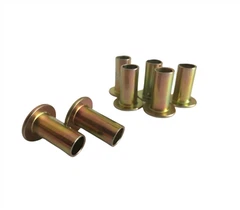
First off, what are rivets? Rivets are fasteners that are used to join two or more pieces of material together. They come in all sorts of shapes and sizes, like the Button Head Solid Rivets. These little guys have a rounded head on one end and a shank on the other. When you install them, you put the shank through holes in the materials you want to join and then deform the end of the shank to hold everything in place.
Now, the marine environment is a tough one. It's full of saltwater, which is super corrosive. There's also a lot of movement and vibration on boats and other marine structures. So, for rivets to work in this environment, they need to be up to the challenge.
One of the key factors is the material of the rivets. We usually recommend using rivets made from materials that are resistant to corrosion. Stainless steel is a popular choice. It can stand up to the saltwater and won't rust easily. Aluminum is another option. It's lightweight, which is great for boats where every bit of weight matters. And it also has a natural oxide layer that helps protect it from corrosion.

Let's talk about some of the specific marine applications where rivets can be used. On boats, they're used in all sorts of places. For example, they're used to attach the hull plating to the frame. This is a critical job because the hull needs to be strong and watertight. Rivets provide a reliable and long - lasting connection that can withstand the forces of the water and the movement of the boat.
They're also used in the construction of decks. Decks need to be able to handle people walking on them, as well as the elements. Rivets can hold the decking boards securely in place, preventing them from shifting or coming loose.
In the interior of boats, rivets are used for things like attaching cabinets, shelves, and other fixtures. They provide a clean and sturdy connection that looks good and lasts.
Another important aspect is the installation of rivets in marine applications. It's not just about slapping them in there. Proper installation is crucial. You need to make sure the holes are the right size. If the holes are too big, the rivets won't hold properly. If they're too small, it can be difficult to install the rivets and you might damage the materials.
You also need to use the right tools for the job. There are special rivet guns designed for different types of rivets. These guns apply the right amount of force to deform the rivet shank and create a strong connection.
Now, let's consider the advantages of using rivets in marine applications. One big advantage is their strength. Rivets can provide a very strong and permanent connection. Unlike some other fasteners, they won't come loose over time due to vibration or movement.
They're also relatively easy to install. You don't need a lot of specialized skills or equipment to install rivets. As long as you follow the proper procedures, you can get a good result.
Rivets are also cost - effective. They're generally less expensive than some other types of fasteners, especially when you're dealing with large - scale projects like boat construction.
However, there are also some potential drawbacks. One is that once a rivet is installed, it can be difficult to remove. If you need to make repairs or modifications, you might have to drill out the rivets, which can be time - consuming and might damage the surrounding materials.
Another thing to consider is that in some cases, the corrosion resistance of rivets might not be enough. If the boat is in a particularly harsh marine environment, like in areas with a lot of pollution or where the water is very acidic, the rivets might still corrode over time.
So, can rivets be used in marine applications? The answer is a resounding yes! But you need to choose the right type of rivets, install them correctly, and be aware of their limitations.
If you're in the market for rivets for your marine project, we've got you covered. We offer a wide range of high - quality rivets, including the Button Head Solid Rivets. Our rivets are made from top - notch materials and are designed to meet the demands of the marine environment.
Whether you're building a small fishing boat or a large yacht, we can provide the rivets you need. And if you have any questions about which rivets are right for your project, our team of experts is here to help. Just reach out to us, and we'll be happy to have a chat and guide you through the process. Let's work together to make your marine project a success!
References
- "Marine Fasteners Handbook" - A comprehensive guide on fasteners used in the marine industry.
- "Boat Building Basics" - A book that covers various aspects of boat construction, including the use of rivets.


