
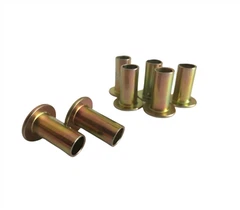



When it comes to fasteners, rivets play a crucial role in various industries, from automotive to construction and manufacturing. As a rivet supplier, I often encounter customers who are unsure about the differences between copper rivets and steel rivets. In this blog post, I'll delve into the characteristics, advantages, and applications of both types of rivets to help you make an informed decision for your projects.
Material Properties
Copper is a soft, malleable, and ductile metal with excellent electrical and thermal conductivity. It has a distinctive reddish-brown color and is highly resistant to corrosion, especially in marine environments. Copper is also known for its antimicrobial properties, making it a popular choice for applications where hygiene is a concern.
Steel, on the other hand, is an alloy of iron and carbon, with varying amounts of other elements such as manganese, chromium, and nickel. It is a strong, durable, and versatile material that can be heat-treated to achieve different levels of hardness and strength. Steel is commonly used in applications where high strength and toughness are required.
Physical Characteristics
- Appearance: Copper rivets have a warm, rich color that can add an aesthetic appeal to the finished product. The color of copper may change over time due to oxidation, developing a patina that can enhance its visual appeal. Steel rivets, on the other hand, typically have a silver-gray color, which can be coated or plated to improve corrosion resistance or achieve a specific aesthetic.
- Weight: Copper is a relatively heavy metal, which means that copper rivets are generally heavier than steel rivets of the same size. This can be a consideration in applications where weight is a critical factor, such as aerospace or automotive industries.
- Hardness: Steel is generally harder than copper, which makes steel rivets more resistant to deformation and wear. However, the hardness of steel can also make it more brittle, which may be a disadvantage in applications where flexibility is required.
Mechanical Properties
- Strength: Steel rivets are generally stronger than copper rivets, especially in shear and tensile strength. This makes steel rivets a better choice for applications where high strength is required, such as structural connections or heavy machinery.
- Ductility: Copper is more ductile than steel, which means that it can be deformed without breaking. This makes copper rivets a better choice for applications where flexibility is required, such as in the assembly of sheet metal or leather goods.
- Corrosion Resistance: Copper has excellent corrosion resistance, especially in marine environments. It forms a protective oxide layer on its surface, which prevents further corrosion. Steel, on the other hand, is prone to rusting if not properly protected. However, steel can be coated or plated with materials such as zinc or chrome to improve its corrosion resistance.
Applications
- Copper Rivets: Copper rivets are commonly used in applications where aesthetics, corrosion resistance, and electrical conductivity are important. They are often used in the jewelry, leather, and decorative industries, as well as in electrical and electronic applications. For example, copper rivets can be used to attach leather straps to bags or belts, or to connect electrical wires in electronic devices.
- Steel Rivets: Steel rivets are widely used in applications where high strength and durability are required. They are commonly used in the construction, automotive, and aerospace industries, as well as in machinery and equipment manufacturing. For example, steel rivets can be used to join structural steel members in buildings, or to assemble automotive components such as engines and transmissions.
Cost
The cost of copper rivets is generally higher than that of steel rivets due to the higher cost of copper as a raw material. However, the cost of rivets also depends on factors such as size, quantity, and manufacturing process. In some cases, the higher cost of copper rivets may be justified by their superior properties and performance.

Choosing the Right Rivet
When choosing between copper rivets and steel rivets, it's important to consider the specific requirements of your application. Here are some factors to consider:
- Strength Requirements: If your application requires high strength, steel rivets are likely the better choice. However, if flexibility is more important, copper rivets may be a better option.
- Corrosion Resistance: If your application is exposed to corrosive environments, copper rivets may be a better choice due to their superior corrosion resistance. However, if proper corrosion protection measures are taken, steel rivets can also be used in corrosive environments.
- Aesthetics: If the appearance of the rivets is important, copper rivets may be a better choice due to their warm, rich color. However, steel rivets can be coated or plated to achieve a specific aesthetic.
- Cost: If cost is a major consideration, steel rivets are generally more affordable than copper rivets. However, the cost of rivets also depends on factors such as size, quantity, and manufacturing process.
Conclusion
In conclusion, both copper rivets and steel rivets have their own unique characteristics, advantages, and applications. As a rivet supplier, I can help you choose the right type of rivet for your specific needs. Whether you need copper rivets for their aesthetic appeal and corrosion resistance, or steel rivets for their high strength and durability, I have a wide range of products to meet your requirements.
If you're interested in learning more about our rivets, including Button Head Solid Rivets, please feel free to contact us for a quote or to discuss your project requirements. We look forward to working with you to find the best rivet solution for your needs.
References
- ASM Handbook, Volume 1: Properties and Selection: Irons, Steels, and High-Performance Alloys.
- Metals Handbook Desk Edition, 2nd Edition.
- Machinery's Handbook, 30th Edition.


