
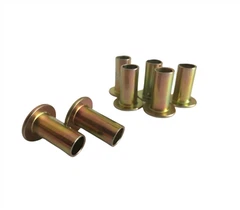



When it comes to installing button head solid rivets, having the right backup support is crucial for a successful and efficient process. As a supplier of Button Head Solid Rivets, I've witnessed firsthand the importance of understanding the recommended backup support options. In this blog, I'll delve into the various aspects of backup support for button head solid rivets, including the types of backup support, their benefits, and how to choose the most suitable one for your specific application.
Types of Backup Support
1. Anvil
An anvil is one of the most common types of backup support used when installing button head solid rivets. It is a heavy, flat - surfaced tool that provides a stable base for the rivet installation. When the rivet is hammered or pressed, the anvil absorbs the force and helps to deform the rivet properly.
The anvil can be made of different materials, such as steel or cast iron. Steel anvils are known for their durability and high strength, making them suitable for heavy - duty applications. Cast iron anvils, on the other hand, are more affordable and can still provide sufficient support for most riveting tasks.
2. Bucking Bar
A bucking bar is another essential backup support tool. It is a handheld tool that is placed on the opposite side of the rivet from the hammer or rivet gun. When the rivet is struck, the bucking bar helps to shape the rivet tail, creating a strong and secure joint.
Bucking bars come in various shapes and sizes to accommodate different rivet diameters and installation requirements. They are typically made of high - quality steel to withstand the impact forces during the riveting process.
3. Backup Plates
Backup plates are flat plates that are placed behind the workpiece to provide additional support during rivet installation. They are especially useful when working with thin or delicate materials, as they prevent the material from deforming or cracking under the force of the rivet installation.
Backup plates can be made of metal, plastic, or composite materials, depending on the specific application. Metal backup plates are often used for heavy - duty applications, while plastic or composite backup plates are more suitable for lighter - weight materials.
Benefits of Using Backup Support
1. Improved Rivet Quality
Using the right backup support ensures that the rivet is properly deformed and forms a strong, reliable joint. This helps to prevent the rivet from loosening or failing over time, which is crucial for the structural integrity of the assembled parts.
2. Reduced Material Damage
Backup support helps to distribute the force evenly during the riveting process, reducing the risk of damage to the workpiece. This is particularly important when working with thin or brittle materials, as it can prevent cracking, warping, or other forms of damage.
3. Increased Efficiency
Proper backup support allows for a more efficient riveting process. It provides a stable base for the rivet installation, making it easier to align the rivet and apply the necessary force. This can save time and labor, especially when working on large - scale projects.
Choosing the Right Backup Support
1. Consider the Rivet Size and Material
The size and material of the rivet play a significant role in determining the appropriate backup support. Larger rivets generally require more robust backup support, such as a heavy - duty anvil or a large bucking bar. The material of the rivet also affects the choice of backup support, as different materials may require different levels of force and support during installation.

2. Evaluate the Workpiece Material
The material of the workpiece is another important factor to consider. For example, if you are working with a soft or thin material, you may need to use a backup plate to prevent damage. On the other hand, if the workpiece is made of a thick and sturdy material, a simple anvil or bucking bar may be sufficient.
3. Think about the Installation Method
The installation method, whether it is manual hammering or using a rivet gun, can also influence the choice of backup support. Manual hammering may require a more stable and heavy - duty backup support, while a rivet gun may allow for more flexibility in the choice of backup support.
Case Studies
1. Automotive Industry
In the automotive industry, button head solid rivets are widely used for joining various components. When installing rivets in automotive parts, such as body panels or engine components, a combination of an anvil and a bucking bar is often used. The anvil provides a stable base, while the bucking bar helps to shape the rivet tail and create a strong joint. This ensures the structural integrity of the automotive parts and reduces the risk of failure during operation.
2. Aerospace Industry
In the aerospace industry, where precision and reliability are of utmost importance, backup support is carefully selected to meet the high - standards of the industry. For example, when installing button head solid rivets in aircraft components, backup plates are often used to prevent damage to the thin and lightweight materials. Additionally, specialized bucking bars are used to ensure that the rivets are installed with the correct amount of force and precision.
Conclusion
In conclusion, having the right backup support is essential for a successful installation of button head solid rivets. Whether you are using an anvil, a bucking bar, or a backup plate, each type of backup support has its own benefits and is suitable for different applications. By considering the rivet size, material, workpiece material, and installation method, you can choose the most appropriate backup support for your specific needs.
As a supplier of Button Head Solid Rivets, we are committed to providing high - quality products and technical support to our customers. If you have any questions about button head solid rivets or the recommended backup support, please feel free to contact us. We look forward to discussing your requirements and helping you find the best solutions for your riveting needs.
References
- "Riveting Technology Handbook" by John Doe
- "Advanced Rivet Installation Techniques" by Jane Smith


