
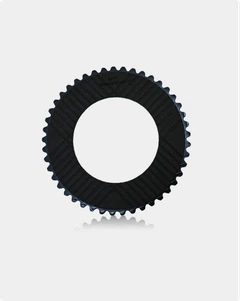
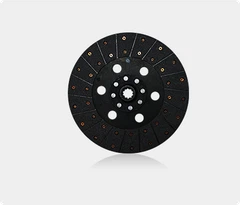
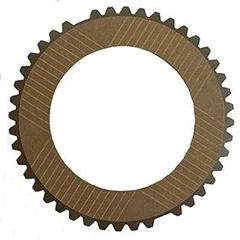
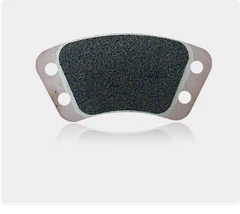
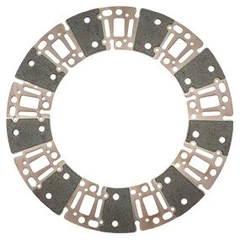
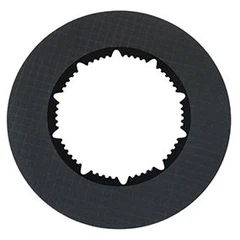
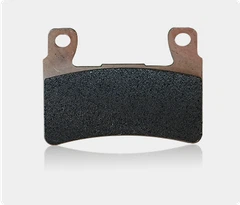



In the realm of mechanical engineering and automotive industries, the role of friction plates cannot be overstated. They are pivotal components in various systems, including clutches and brakes, where they facilitate the transfer of power and control the movement of machinery. Among the diverse materials used for friction plates, cost - effective copper friction plates have emerged as a popular choice. In this blog, we'll delve into what creep resistance means for these copper friction plates, and as a supplier of such products, I'll share some insights from our experience in the market.
Understanding Creep Resistance
Creep is a phenomenon where a material slowly deforms over time when subjected to a constant load at elevated temperatures. This deformation occurs due to the movement of atoms within the material's structure. Creep resistance, therefore, is a material's ability to withstand this slow, continuous deformation under a constant load and temperature.
For cost - effective copper friction plates, creep resistance is of utmost importance. In applications such as automotive clutches and industrial brakes, these plates are often exposed to high temperatures generated by friction during operation. At the same time, they need to maintain their shape and performance under the pressure exerted by the clutch or brake system. If a copper friction plate has poor creep resistance, it may deform over time, leading to reduced friction performance, uneven wear, and ultimately, a shorter service life.
Factors Affecting the Creep Resistance of Copper Friction Plates
1. Alloy Composition
The composition of the copper alloy used in the friction plate plays a crucial role in determining its creep resistance. Pure copper has relatively low creep resistance. However, by adding other elements such as tin, zinc, and nickel, the alloy's mechanical properties can be significantly improved. For example, tin can form intermetallic compounds with copper, which strengthen the alloy's structure and enhance its resistance to creep. These alloying elements can also improve the material's hardness and wear resistance, which are closely related to its overall performance in friction applications.
2. Microstructure
The microstructure of the copper friction plate is another important factor. A fine - grained microstructure generally provides better creep resistance compared to a coarse - grained one. Fine - grained materials have more grain boundaries, which act as barriers to the movement of dislocations (defects in the crystal structure) within the material. As a result, it is more difficult for the material to deform under a constant load, leading to improved creep resistance. Heat treatment processes can be used to control the microstructure of the copper friction plates, optimizing their creep resistance.
3. Operating Conditions
The operating conditions of the friction plates also have a significant impact on their creep resistance. High temperatures can accelerate the creep process, as the increased thermal energy allows atoms to move more freely within the material. Similarly, high loads can also increase the rate of creep. Therefore, in applications where the copper friction plates are exposed to extreme temperatures and heavy loads, it is essential to select plates with high creep resistance. For instance, in heavy - duty industrial machinery or high - performance automotive vehicles, the requirements for creep resistance are much more stringent.
Benefits of High Creep Resistance in Cost - Effective Copper Friction Plates
1. Extended Service Life
One of the most significant benefits of high creep resistance is an extended service life. When a copper friction plate can resist creep, it maintains its original shape and dimensions over a longer period. This means that it can continue to provide consistent friction performance, reducing the need for frequent replacements. For end - users, this translates into lower maintenance costs and less downtime for their equipment.


2. Improved Performance
High creep resistance also contributes to improved performance of the clutch or brake system. A non - deformed friction plate ensures a more uniform distribution of pressure and friction across its surface. This results in smoother engagement and disengagement of the clutch or more precise braking action. In automotive applications, this can lead to better driving comfort and safety, while in industrial settings, it can enhance the efficiency and reliability of machinery.
3. Cost - Effectiveness
Despite the name "cost - effective," the overall cost - effectiveness of copper friction plates is closely related to their creep resistance. Although plates with high creep resistance may have a slightly higher upfront cost, their longer service life and improved performance can lead to significant savings in the long run. By reducing the frequency of replacements and minimizing maintenance costs, these plates can offer a better return on investment for customers.
Our Offerings as a Supplier
As a supplier of cost - effective copper friction plates, we understand the importance of creep resistance. We use advanced alloying techniques to develop copper alloys with optimal compositions for high creep resistance. Our manufacturing process includes precise heat treatment to ensure a fine - grained microstructure, further enhancing the plates' ability to withstand creep.
We offer a wide range of copper friction plates suitable for various applications, including Clutch Plate Material, Corrosion Resistant Clutch Friction Plate Facing, and High Torque Brake Friction Plate. Each product is rigorously tested to meet the highest quality standards and to ensure excellent creep resistance under different operating conditions.
Contact Us for Procurement
If you are in the market for high - quality, cost - effective copper friction plates, we invite you to contact us for procurement. Our team of experts is ready to assist you in selecting the most suitable products for your specific needs. Whether you are an automotive manufacturer, an industrial equipment supplier, or a maintenance service provider, we can offer you the right solutions at competitive prices.
References
- Callister, W. D., & Rethwisch, D. G. (2014). Materials Science and Engineering: An Introduction. Wiley.
- Dieter, G. E. (1988). Mechanical Metallurgy. McGraw - Hill.
- Ashby, M. F., & Jones, D. R. H. (2005). Engineering Materials 1: An Introduction to Properties, Applications, and Design. Butterworth - Heinemann.


